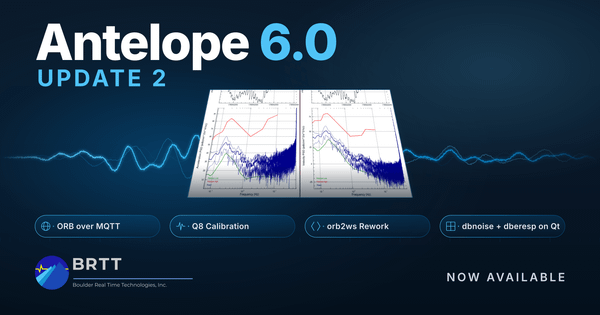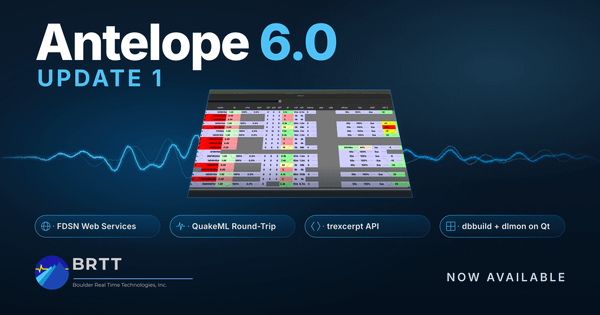
Antelope 6.0 releases May 1st, and it’s our biggest release in years. As part of our BRTT 3.0 initiative, we have been focused on updating Antelope’s infrastructure to bring modern software practices to the seismology community. This release reflects that effort: we’ve rebuilt core infrastructure, added interoperability features the community has been asking for, and made it significantly easier to deploy and scale.
Here’s what to expect.
Cloud Platform and Network Monitoring
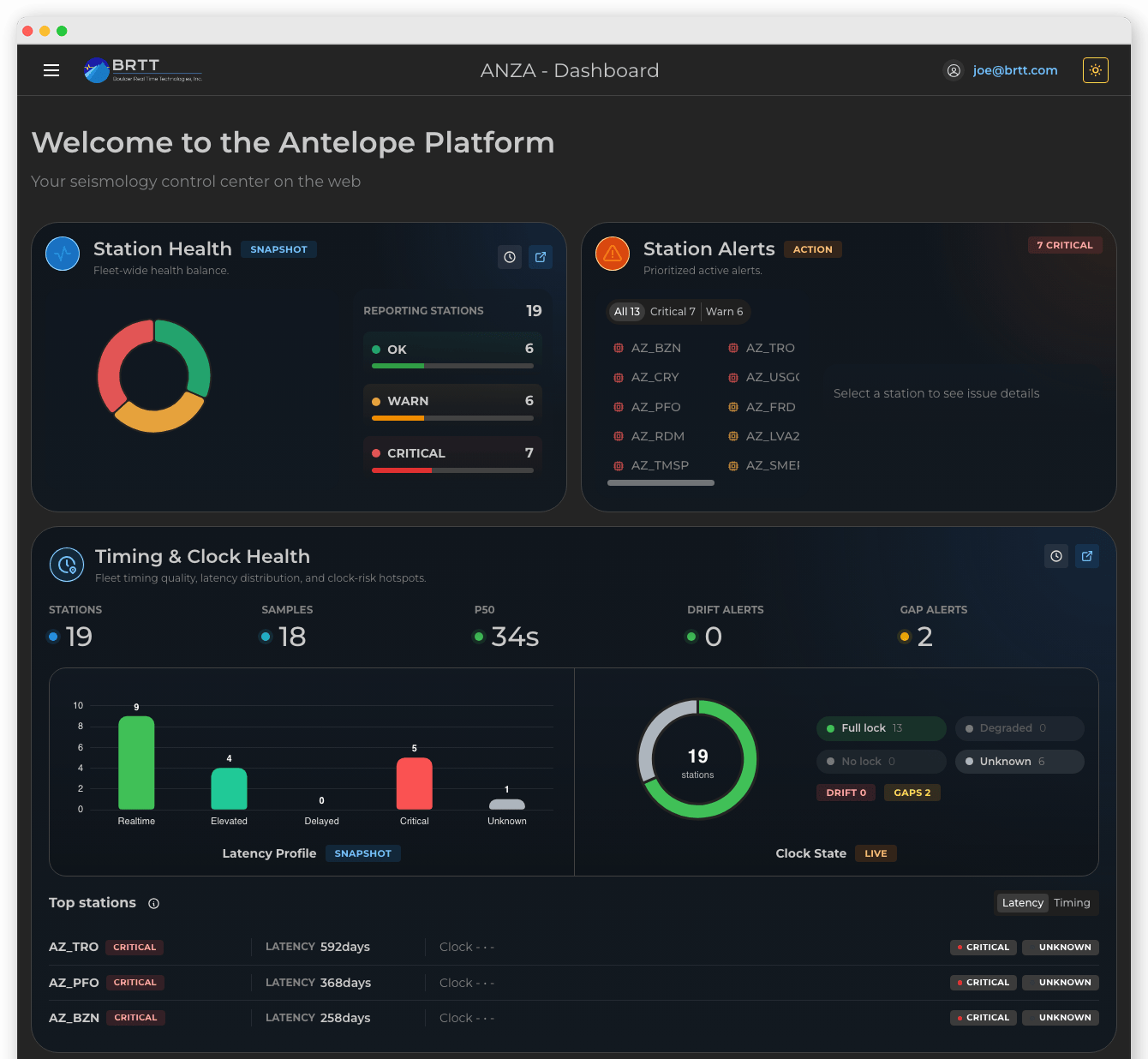
The Antelope 6.0 release brings first-class integration with our new Antelope Cloud Platform. Over the last year, we’ve added cloud experts to our team and have been building the Antelope Cloud Platform to deliver a new era of modern cloud-based capabilities for real-time seismic monitoring, analysis, and alerting. The platform architecture is designed to be highly available, secure, and scalable to ensure reliable access and performance for users around the world.
Our first production application in the Antelope Platform is the DataLogger Monitor (DLMon)You can start using DLMon by simply connecting your network to our cloud platform via an available orbserver export point. With DLMon, you can get real-time status and health monitoring for your seismic network equipment from any internet-connected mobile or desktop device, a significant advantage for remote and field operations.
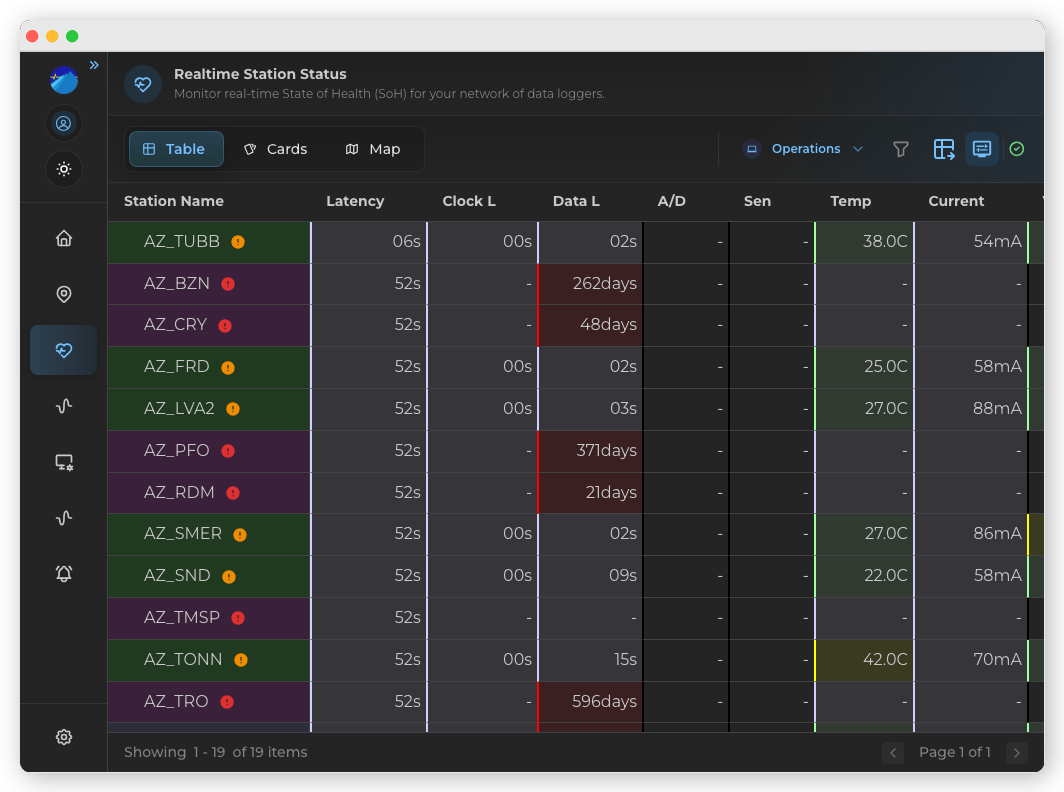
We will be adding more applications to the Antelope Cloud Platform over time, including solutions for structural health monitoring, earthquake early warning, waveform analysis, and more. More details will be shared on the blog as new applications launch.
Lightweight Docker Containers
Antelope 6.0 expands its software distribution options and ships modular Docker container images for individual Antelope services. Each image contains only the binaries and libraries needed for a single function, dramatically reducing image sizes compared to the previous full-distribution tarball approach.
Why it matters
- Fast, repeatable deployments. Small images pull quickly and start in seconds. Ideal for CI/CD pipelines and automated provisioning.
- Run anywhere. Cloud VMs, Kubernetes clusters, on-prem servers, edge devices. No special installation or dependencies beyond a container runtime.
- Composable architectures. Operators can assemble exactly the Antelope pipeline they need by combining individual service containers. A Docker Compose file can orchestrate a complete real-time system (data acquisition, event detection, location, alerting) in a single configuration.
- Proven in practice. The Global Seismographic Network (GSN) demo real-time system is running in a "headless" container (full
rtexecinside a container) and a Docker Compose stack with individually orchestrated processes. Both configurations reliably process and locate earthquakes.
Orb-Seedlink-Orb Compatibility
Expanding on Antelope's broad interoperability features, we are introducing new multithreaded seedlink2orb and orb2seedlink programs. These additions give Antelope complete, bidirectional SeedLink bridge capability.
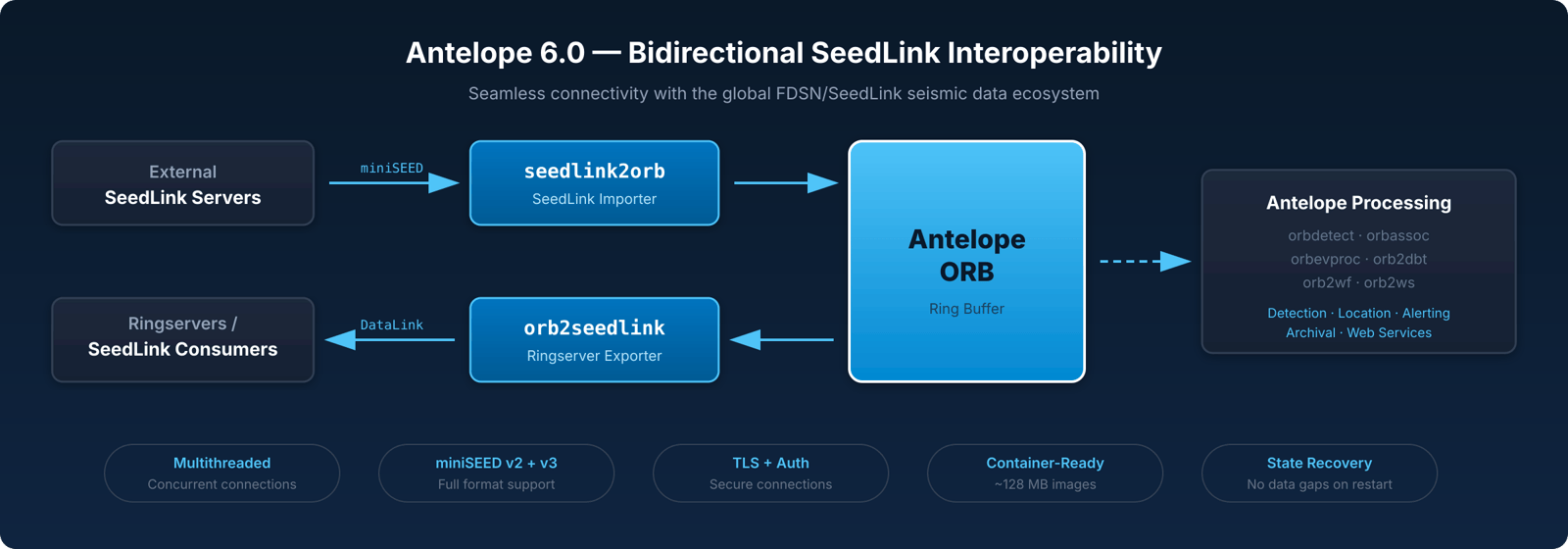
The multithreaded architecture of this implementation allows each SeedLink client connection to be handled in a separate thread, improving performance and scalability. This means Antelope can now serve as a robust SeedLink server or client, seamlessly integrating with external systems that use the SeedLink protocol for real-time seismic data streaming. Default output is miniSEED v3, with v2 fallback for legacy ringservers.
The new SeedLink capabilities support any waveform type supported by the orbserver, including of course the standard GENC and MGENC ORB packets. Samples are buffered per channel and packed into miniSEED records before being forwarded. SEED-type ORB packets may contain a miniSEED record version 2 or 3, which is forwarded directly to the ringserver without re-packing.
The new seedlink2orb and orb2seedlink are also available as lightweight containers.
q82orb
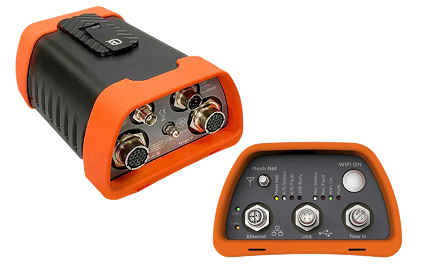
First-class native support for the Kinemetrics Quanterra Q8 datalogger is coming in Antelope 6.0. Built on Antelope’s proven orb2orb framework, q82orb delivers high-throughput, multi-threaded performance with full access to ORB filtering and data-handling tools. Network operators can configure, monitor, and control their Q8 datalogger fleet remotely, enabling rapid response to issues that may arise in the field.
This is a major advance from waveform-only acquisition, and parallels our historic full support (acquisition, state-of-health, and command-and-control) of Kinemetrics dataloggers in the tradition of the Altus series and Q330.
See Us at SSA 2026
We'll be at the 2026 Seismological Society of America Annual Meeting in April with demos of the Antelope Cloud Platform, q82orb, and more. Stop by the Kinemetrics booth to see the latest Antelope 6.0 features and learn how they can support your network.
Get Started with Antelope 6.0
Antelope 6.0 releases May 1st, 2026. Current Antelope license holders will receive upgrade instructions via email. If you are new to Antelope or want to learn more, contact us to schedule a demo or discuss how Antelope can support your network.
For questions, email info@brtt.com or visit brtt.com. Current customers can request support by emailing support@brtt.com.